FIELD NOTES /
Windows Malware Development:技術鏈與逆向註解
以防禦與授權研究為前提,完整拆解 staging、載入、記憶體異常、process injection、持久化、C2 與證據鏈。
先把 Malware 看成一條行為鏈
只看單一 hash、domain 或 API 很容易誤判。較完整的模型是把樣本拆成多個階段,再為每一階段建立 artifact、telemetry 與假設:
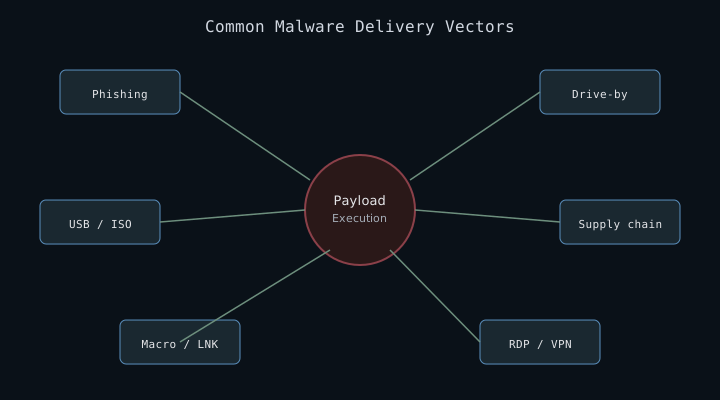
Delivery / Staging
  → Execution / Loader
    → Discovery / Privilege Context
      → Persistence
        → Defense Evasion
          → Credential / Collection
            → Command and Control
              → Actions on Objectives
實際樣本不一定包含全部階段,也可能把不同功能拆到多個 processes、services 或 modules。分析目標不是替樣本貼一個家族名稱,而是回答:它做了什麼、在什麼條件下做、留下哪些可重現證據、我們能在哪一層阻止或偵測。
建立安全、可重複的分析環境
最低隔離要求
- 專用 VM,不使用日常工作帳號與真實瀏覽器資料。
- 分析前建立 snapshot,樣本與工具版本記錄在 case notes。
- 預設斷網;需要觀察流量時使用模擬 DNS/HTTP 服務或嚴格受控出口。
- 關閉 host integration、shared clipboard、shared folders 與不必要的 USB passthrough。
- 從乾淨基線產生 file、registry、service、scheduled task 與 process 差異。
- 所有時間來源統一,保留 timezone 與 clock drift 資訊。
證據處理
對每個樣本至少記錄:原始檔 SHA-256、取得來源、取得時間、檔案大小、簽章狀態、分析 VM build、工具版本與每次執行的命令列。原始樣本應設為唯讀保存;衍生檔、unpacked image、memory dump 與報告分開雜湊。
Triage:先決定從哪裡深入
1. 檔案與 PE 結構
| 面向 | 觀察項目 | 解讀方式 |
|---|---|---|
| Identity | Hash、size、compile metadata、signature | Timestamp 可偽造;signature 要檢查 trust chain,不只看欄位存在 |
| PE headers | Machine、subsystem、entry point、sections | 異常 alignment 或權限是線索,不是 verdict |
| Imports | Static imports、delay imports、ordinal | Import 很少可能是 packer,也可能是簡單程式 |
| Resources | Manifest、icons、embedded config | 比對宣稱產品與實際 signer/version info |
| Entropy | 全檔與逐 section entropy | 壓縮、加密、圖片與合法 packer 都會提高 entropy |
| Overlay | PE image 結束後的額外資料 | Installer、signature 與惡意 config 都可能存在 overlay |
第一輪的目的不是「靜態分析就定罪」,而是產生待驗證假設。例如 .text 很小、某高 entropy section 很大、imports 只剩幾個 loader API,可能表示執行時會解包;下一步就應在 entry point、memory protection change 與新 executable region 之間建立關聯。
2. Strings 與 configuration
將 strings 分為四類比全部丟進 IOC 清單更有效:
- 功能字串:API、錯誤訊息、format string。
- 基礎設施:domain、URI pattern、user-agent、certificate metadata。
- 主機 artifact:mutex、pipe、service、task、registry path、file path。
- 編譯 artifact:PDB path、language runtime、library signature。
需要確認字串是「真的被引用」還是未使用資料。加密 blob 則先辨識 framing:版本、長度、nonce、key identifier、compression marker 與 checksum;不要一看到 XOR loop 就假定所有資料使用同一 key。
Execution 與 Loader:觀察狀態變化
Loader 的本質是把某種 representation 轉成可執行狀態。防禦者不需要複作 loader,也能從狀態轉換辨識它:
輸入 bytes
  → allocation / section mapping
  → copy / decompress / decrypt
  → relocation 與 import resolution
  → protection transition
  → control transfer
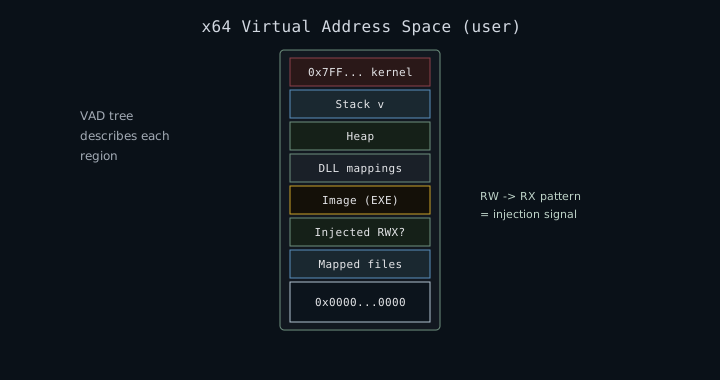
正常 Windows loader 會建立 image mapping、處理 imports、TLS 與 loader bookkeeping。自訂 loader 或 reflective loading 可能產生不同 footprint,例如 executable private pages、PE-like bytes 不在 module list、thread stack 回到未命名 region,或 image mapping 與 disk file 不一致。
Memory region 的五個問題
對每段可疑記憶體依序問:
- 它從哪裡來? Allocation、section map、image load 或 copy-on-write?
- 誰寫入? 本 process、另一 process、kernel component 或 debugger?
- Protection 如何變化? RWX、RW→RX、image-backed executable 或 guard pages?
- 誰執行? Existing thread、new thread、APC、callback 或 exception path?
- 內容像什麼? PE、shellcode-like code、JIT code、decompressed config 或純資料?
RW → RX Lab — 注入記憶體 protection 變化
PAGE_READWRITE
Pointer Lab — 陣列索引 vs 指標偏移
索引 a = 0
Memory (each int = 4 bytes) — 點 cell 切換 a
當 a = 0 時,*(p + a) 讀到 10,位址 0x100040
int values[4] = { 10, 20, 30, 40 };
int a = 0;

values[a]     → 10
*(values + a) → 10
&values[a]    → 0x100040
API Resolution 與 Hashing:從分析角度還原
部分樣本不保留敏感 API 明文,而是在執行時走訪 export table,以 hash 或自訂比較函式選出目標。分析重點不是背某個 hash 常數,而是辨識 resolver 的輸入、正規化規則與輸出。
API Hashing 迴圈的逆向思路
hash = seed
for each byte in export_name
hash = rotate_or_mix(hash, byte)
compare hash with constant
return resolved address
Resolver 還原流程
- 找到遍歷 export directory 的 loop。
- 記錄 module selection、name normalization 與 hash width。
- 用獨立腳本對合法 DLL exports 批次計算。
- 對 collision 保留所有候選,不要過早命名。
- 依 call-site 參數、回傳用途與動態 trace 確認函式。
- 將確認後的名稱回填 IDA/Ghidra,重跑 call graph 與 capability grouping。
這種方法也適用於 syscall wrappers、COM method table 與動態載入的 runtime symbols。
Process Injection:技術家族與證據鏈
MITRE ATT&CK 將 Process Injection 歸為 T1055,並拆成 DLL injection、PE injection、thread execution hijacking、APC、process hollowing 等子技術。不同實作共享的高階序列通常是:取得目標 process、把 code/data 放進其 address space、讓目標 execution context 使用它。
| 技術家族 | 主要狀態變化 | 較有價值的證據 |
|---|---|---|
| Remote allocation + execution | Target 出現外部寫入的 private region,接著有新執行點 | Process access、cross-process write、thread start address、region protection |
| Section-based mapping | 同一 section 映射到兩個 processes 或 target 出現非典型 mapping | Section provenance、mapped views、memory content、creator process |
| APC-based execution | Code 經由既有 thread 的 APC path 執行 | APC delivery context、alertable wait、target region、preceding process access |
| Thread context hijack | 既有 thread 的 instruction context 被改變 | Suspend/resume、context change、stack discontinuity、new IP region |
| Process hollowing / tampering | Process identity 與實際 memory image 不一致 | Original image、replacement mapping、PEB image base、Sysmon process tampering |
| DLL-based injection | Target 載入非預期 DLL | Image-load event、module path、signature、load provenance、search-order context |
為什麼單一 API rule 不夠?
Debugger、accessibility software、security products、game overlays 與管理工具都可能跨 process 開 handle、讀寫記憶體或建立 thread。反之,攻擊者可用不同 native mechanisms 達成相同狀態。因此可靠偵測應聚合:
- Source process reputation、signer、integrity 與 parentage。
- Granted access 與 target sensitivity。
- Target memory region 的 type、protection 與 provenance。
- Execution 是否落在合法 loaded image。
- 前後是否伴隨 credential access、persistence 或 network beacon。
Persistence:看「自動啟動關係」而不是只背位置
Persistence 的共同目標是建立「某個 trigger 發生時,自動啟動攻擊者控制內容」的關係。可依 trigger 分類:
| Trigger | 例子 | 調查重點 |
|---|---|---|
| User logon | Run keys、Startup items、logon scripts | Owner SID、command line、file provenance、首次出現時間 |
| Schedule / timer | Scheduled Tasks | Author、principal、trigger、hidden flag、action path |
| Service start | Windows services、drivers | Service type、start mode、ImagePath、signer、ACL |
| Application load | DLL search order、COM registration、extensions | Host process、registration change、loaded module path |
| Event-driven | WMI subscription 等 | Filter、consumer、binding 與建立者 |
Autoruns 很適合做 cross-location inventory,但「有自動啟動項」不等於惡意。應回到 owner、change time、binary signer、command line、parent process 與 deployment context。
Defense Evasion 與 Anti-Analysis
常見樣本會延遲、分階段或條件式啟動。分析時把 evasive behavior 當成可量測條件:
- Sleep / timer:比較 wall-clock、CPU time 與 timer objects。
- Environment checks:記錄被查詢的 process、device、registry、firmware 與 system metadata。
- Debugger checks:觀察控制流程分支,不急著修改所有 check。
- Packing / obfuscation:找資料何時轉為 code、何時出現穩定 configuration。
- Telemetry tampering:驗證 provider/module state 與 clean baseline 差異。
- Unhooking / module replacement:比較 in-memory image、disk image、relocations 與合法 hotpatch。
最有價值的結果不是「成功騙過檢查」,而是列出每個 gate 的條件、true/false 路徑與它控制的 capability。這讓 sandbox 與 hunting team 能建立多組環境覆蓋不同分支。
Dynamic Analysis:建立時間線
將事件按照時間而非工具分類,可以避免各看各的:
T0  sample process created
T1  configuration / embedded resource read
T2  child process or target process opened
T3  memory allocation / mapping / write
T4  protection or thread context changed
T5  persistence artifact created
T6  DNS / network connection
T7  file cleanup or process termination
每個事件至少保留:timestamp、source PID/TID、target object、operation、result、stack 或 caller module(若有)、相關 hash/path 與收集來源。不同 telemetry 的 clocks 與 buffering 會造成順序偏差,因此保留原始時間與 correlation key。
Sysmon 能回答什麼?
Microsoft 將 Sysmon events 定位為 behavioral building blocks,而不是自動等於 alerts。常用關聯包括:
| Event | 能提供的證據 | 限制 |
|---|---|---|
| Process Create | Image、command line、parent、hash | Parent 可受 execution chain 與 telemetry timing 影響 |
| Network Connect | Process 與 destination | 需啟用;看不到完整 application payload |
| Image Load | DLL/module load | 高流量,需精準 include strategy |
| CreateRemoteThread | 跨 process thread creation | 只覆蓋特定 injection family |
| Process Access | Source/target 與 requested access | 非常吵,需針對敏感 target 與 access mask |
| Process Tampering | Hollowing 等 process image manipulation | 有價值但不能覆蓋所有 memory execution |
| File / Registry events | 落地與 persistence artifacts | 需與 process GUID 及 timeline 關聯 |
MITRE ATT&CK Enterprise — click a tactic
Example techniques: Spearphishing, Exploit public-facing app
Network 與 C2 分析
不要只抽 IP/domain。完整 network profile 應包括:
- DNS query pattern、TTL、fallback 與 failed resolutions。
- Connection interval、jitter、session duration、bytes in/out。
- HTTP method、URI shape、header order、user-agent consistency。
- TLS SNI、certificate、ALPN、version 與可用的 fingerprint。
- Proxy awareness、system proxy 使用方式與 credential context。
- Request/response framing、message type、sequence number 與 retry logic。
對 encrypted traffic,重點通常是 metadata 與 endpoint behavior。若在授權 lab 中能從 process memory 或 instrumentation 取得 pre-encryption data,應清楚標記取得點與 chain of custody,不要把解密後內容誤當 wire bytes。
逆向註解:讓分析結果可以交接
我會把註解分成五層:
- Semantic:函式真正做什麼。
- State:輸入、輸出、global state 與 object lifetime。
- Capability:這段支援哪個能力或 ATT&CK behavior。
- Evidence:判斷依據與尚未確認的假設。
- Detection:可在 endpoint、memory 或 network 哪裡觀察。
建議命名帶上信心程度,例如 decrypt_config_probable、resolve_api_hash_confirmed,而不是一開始就命名成特定 malware family。重要結構應還原 field offset、size、encoding、ownership 與使用點;call graph 上則標記 dispatcher、parser、crypto wrapper、transport 與 task handlers。
Function summary 範本
Name: parse_config_confirmed
Inputs: blob pointer, blob length
Outputs: validated config object or error
Side effects: allocates heap object; updates global campaign id
Evidence: 4 call sites; length checks; decoded fields consumed by network init
Open questions: field 0x24 meaning; optional extension after version 3
Detection value: mutex format and URI path become stable after this stage
從 IOC 提升到 Detection Engineering
| 層級 | 範例 | 優缺點 |
|---|---|---|
| Atomic | Hash、IP、domain、mutex | 精準但容易更換,壽命短 |
| Structural | PE layout、config schema、protocol framing | 較穩定,需要 reverse engineering |
| Behavioral | Cross-process memory + anomalous execution | 能跨變種,但需要 context 降低誤報 |
| Strategic | Campaign infrastructure 與 operator workflow | 適合 hunting/CTI,歸因門檻高 |
高品質 detection 應包含 positive logic、known-good exclusions、required telemetry、performance cost、test corpus、預期 false positives 與失效條件。Rule 命中後要能告訴 analyst 下一步收集什麼,而不只是顯示「suspicious」。
報告應回答的問題
一份完整 malware report 至少要能回答:
- 樣本身分與分析環境是什麼?
- 執行需要哪些條件,哪些 branch 尚未覆蓋?
- Capability 與 execution chain 是什麼?
- 建立、修改或存取了哪些 objects 與 artifacts?
- Memory、persistence 與 network 證據如何互相支持?
- 哪些判斷已確認,哪些仍是推測?
- 可立即封鎖什麼、可長期偵測什麼?
- 清除後如何驗證沒有殘留,何時應直接重建主機?
常見誤區
- 看到 high entropy 就說加密:壓縮與媒體資料也可能高 entropy。
- 看到 RWX 就說 injection:需要 writer、executor 與 provenance。
- 只收 IOC、不寫行為鏈:IOC 很快失效,分析價值無法延伸。
- 把 sandbox 沒行為當安全:可能是條件未滿足、延遲或 telemetry 缺口。
- 依 process name 判斷合法:要看 path、signer、token、parent、memory 與行為。
- 將 ATT&CK technique 當檢測規則:ATT&CK 是行為分類,仍需具體 telemetry 與 analytic。
- 修改樣本太早:Patch 可能改變控制流程,使原始行為與報告失去一致性。
延伸閱讀
- MITRE ATT&CK:Process Injection — T1055
- Microsoft Learn:Understanding Sysmon events
- Microsoft Learn:Sysmon overview
- Microsoft Learn:Virtual Address Space
- MITRE:Cyber Analytics Repository
最終目標不是「重現攻擊者的每一行程式碼」,而是把 execution、memory、persistence 與 network 轉成可驗證、可交接、可偵測的證據鏈。
先確認 seed、位元寬度與大小寫正規化。